Indoor Cat Boredom: Easy Enrichment That Works
How do you keep indoor cats from getting bored?
Indoor cats stay happiest when their day has variety: things to climb, stalk, solve, and “hunt.” Boredom often shows up as overeating, nighttime zoomies, scratching furniture, or attention-seeking meows. The goal is to create short bursts of enrichment that fit naturally into a normal routine.
Build a mini “territory” with vertical space
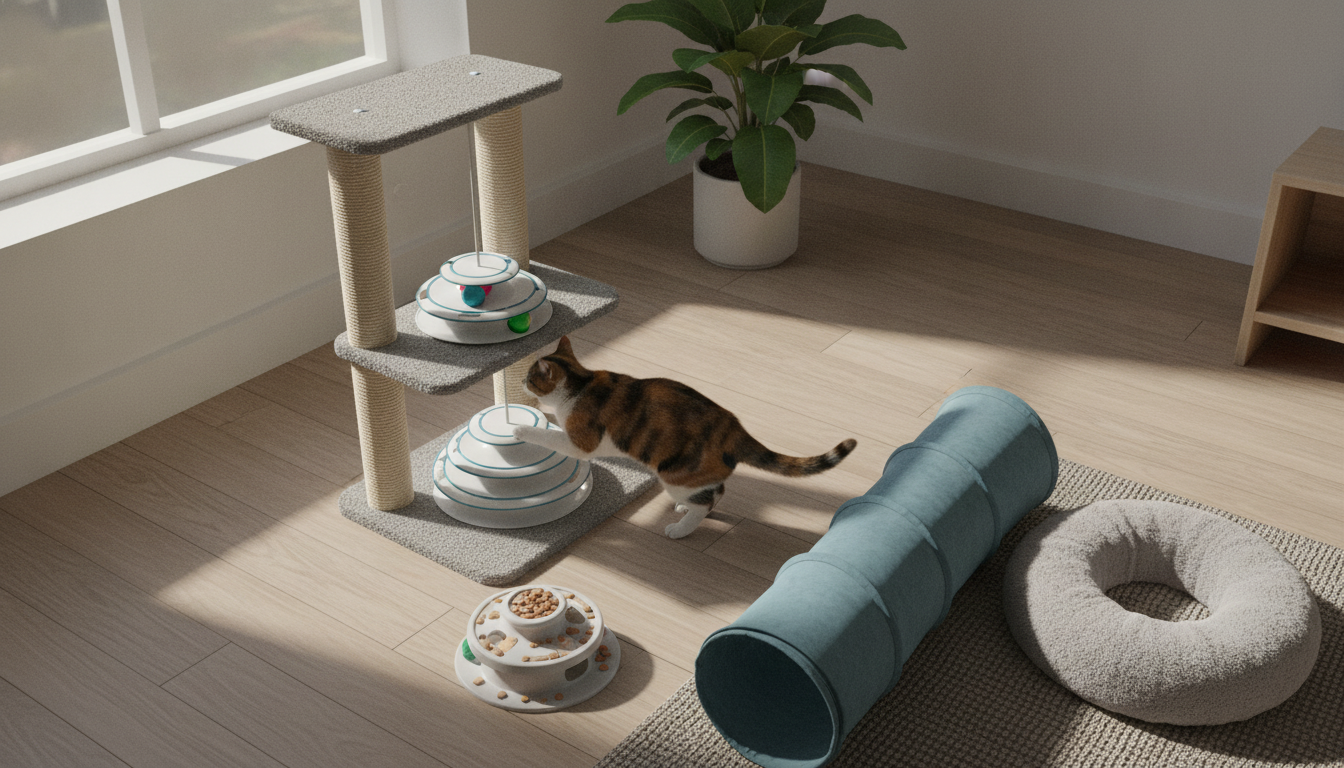
Cats feel secure when they can perch and observe. Add a cat tree, wall shelves, or a sturdy window perch so your cat can rotate spots throughout the day. If space is tight, even a tall scratching post beside a window can become a favorite lookout.
Rotate toys instead of leaving everything out
Too many toys at once become background clutter. Keep a small basket available and swap items every few days: a wand toy, kicker, crinkle ball, or a small plush. A “new” toy doesn’t have to be new—it just needs to reappear after a break.
Make meals a game
Food puzzles and slow feeders turn eating into an activity that mimics hunting. Scatter a few pieces of kibble in safe spots, use a treat ball, or hide small portions in puzzle cups. This is especially helpful for cats that seem restless between meals.
Schedule two quick play sessions daily
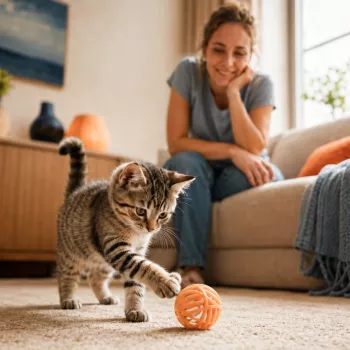
Five to ten minutes of interactive play (wand toys, tossed soft toys, or a laser pointer followed by a physical “catch”) can dramatically reduce boredom. End with a small treat or meal to complete the hunt cycle and encourage calm downtime.
Add safe sensory entertainment
Open a screened window for fresh air, set up a bird-viewing station, or play calm “cat TV” videos occasionally. Some cats also enjoy catnip, silvervine, or cat grass—introduce one at a time to see what clicks.
For more ideas you can mix and match, visit the complete guide: How do you keep indoor cats from getting bored?
FAQ
How much playtime does an indoor cat need each day?
Most indoor cats do well with two interactive play sessions daily, about 5–15 minutes each. Kittens and high-energy adults may need a few extra short sessions to stay relaxed and satisfied.









Leave a comment